How history demands we restore the rights of those who have protected our forests for generations
Introduction: The Invisible People of the Forest
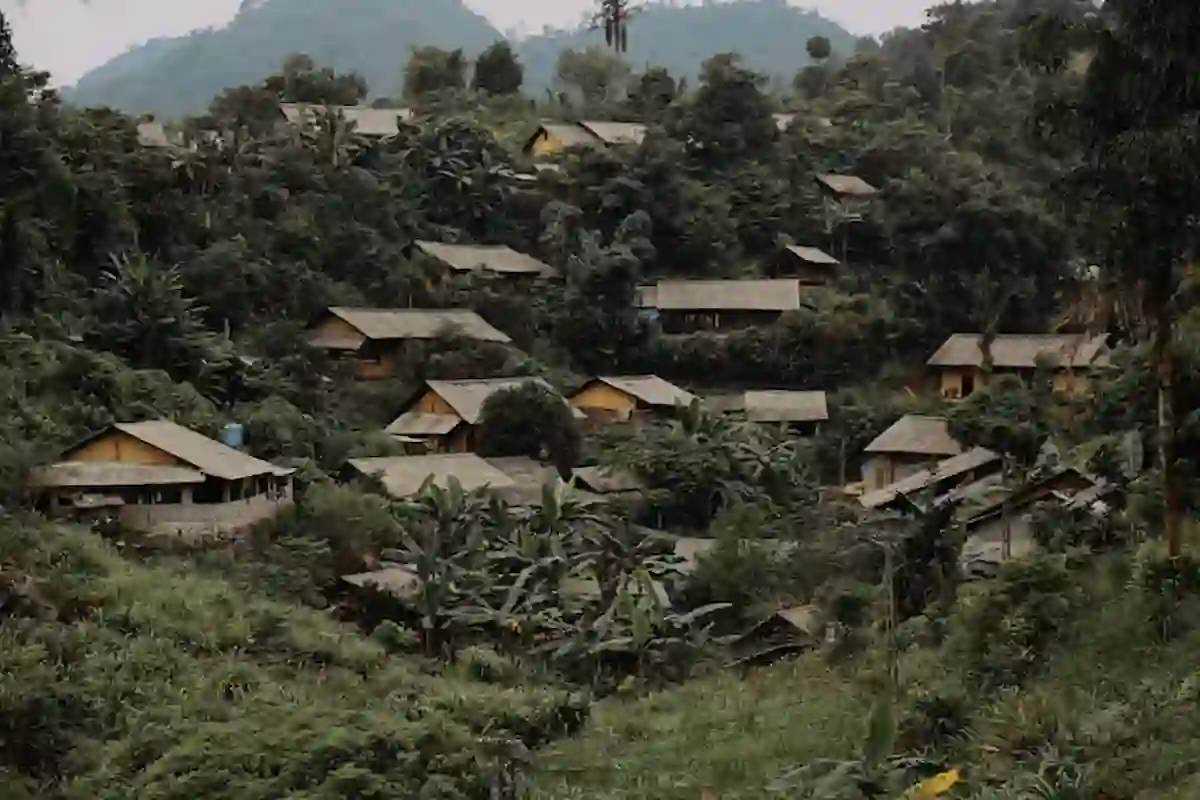
Deep within Ghana's remaining forest belts, there exists a population that has been largely ignored in national development discussions—the forest fringe communities. These are the men, women, and children who have lived in harmony with the forest for centuries, depending on it not just for survival, but for their very identity.
Yet today, these communities face a cruel paradox: they are the ones who protect the forests, but current forest policies do not protect them.
"The people who know the forest best are the ones who benefit from it least. This is the great injustice of our conservation efforts." — Laabi Alexander Kofi, Environmental Advocate
Part 1: A Historical Perspective—The Forest and Its People
1.1 The Original Guardians 100$ JUST FOR YOU
Long before colonial boundaries, before forestry commissions, and before conservation NGOs, forest fringe communities were the true stewards of Ghana's woodlands.
| Historical Period | Relationship with Forest |
|---|---|
| Pre-Colonial Era | Forests were sacred; communities managed them sustainably |
| Colonial Era | British authorities claimed forest ownership, displacing local control |
| Post-Independence | Government took over forest management; local communities marginalized |
| Modern Era | Conservation policies often exclude or criminalize forest-dependent people |
1.2 Traditional Knowledge Systems
Forest fringe communities developed sophisticated systems of sustainable forest use:
- Sacred Groves — Areas protected by spiritual beliefs
- Traditional Taboos — Rules that prevent over-exploitation
- Intergenerational Knowledge — Passed-down wisdom about medicinal plants, weather patterns, and wildlife behavior
- Communal Management — Shared responsibility for forest resources
"Our ancestors taught us to take only what we need. The forest gives us food, medicine, and shelter. We protect it because it protects us." — Nana Kwame Asante, Elder of Wassa Akropong
1.3 The Forest as Life Itself
For forest fringe communities, the forest is not a "resource"—it is life:
| Need | How the Forest Provides |
|---|---|
| Food | Bushmeat, fruits, nuts, mushrooms, honey, plantain, Cocoa and more |
| Medicine | 70% of Ghana's traditional medicines come from forests |
| Shelter | Timber and bamboo for housing |
| Income | Non-timber forest products for sale |
| Water | Forest watersheds supply clean drinking water |
| Culture | Spiritual sites, rituals, and identity |
Part 2: The Current Reality—How Measures Fail Forest Communities
2.1 The Disconnect Between Policy and People
Despite their crucial role in forest preservation, current forest management measures often actively harm the very communities they should protect:
| Current Measure | Impact on Forest Communities |
|---|---|
| Forest Reserve Creation | Communities evicted from ancestral lands |
| Ban on Bushmeat Hunting | Loss of primary protein source |
| Logging Restrictions | Loss of income from legal timber activities |
| Illegal Mining Enforcement | Communities caught in crossfire |
| Conservation NGO Projects | Benefits go to external stakeholders, not locals |
| Carbon Credit Schemes | Money flows to government/corporations, not communities |
2.2 The Paradox: Protectors Without Protection
Forest fringe communities protect the forest daily, yet receive almost no support:
| Community Contribution | Recognition Received |
|---|---|
| Fire management and prevention | None |
| Reporting illegal logging | None |
| Monitoring wildlife populations | None |
| Maintaining traditional knowledge | None |
| Providing labor for reforestation | Minimal day wages |
| Defending forest boundaries | None |
"We are the ones who chase away illegal loggers at night. We are the ones who put out bushfires. We are the ones who plant trees. Yet when the government shares forest revenue, we receive nothing." — Abena Serwaa, Forest Community Member, Bibiani
2.3 The Criminalization of Survival
Perhaps the most painful reality: forest-dependent communities are increasingly treated as criminals for simply trying to survive:
| Traditional Practice | Legal Status | Community Impact |
|---|---|---|
| Hunting bushmeat | Illegal without permit | Loss of food security |
| Harvesting firewood | Regulated/Restricted | Loss of cooking fuel |
| Gathering medicinal plants | Restricted | Loss of healthcare access |
| Small-scale farming | Requires permits | Loss of livelihood |
| Collecting wild fruits/nuts | Limited to certain zones | Loss of nutrition |
Part 3: Why Forest Fringe Communities Matter
3.1 They Are the True Conservationists
Studies show that where forest communities have secure rights, deforestation rates are significantly lower:
| Region | Deforestation Rate (Community-Managed) | Deforestation Rate (Government-Managed) |
|---|---|---|
| Wassa Amenfi | 0.6% per year | 2.3% per year |
| Offin River Basin | 0.8% per year | 2.8% per year |
| Tano-Offin | 0.5% per year | 2.1% per year |
Source: Community Forest Management Impact Study, University of Ghana (2023)
3.2 They Provide Free Ecological Services
Forest fringe communities provide billions of cedis worth of unpaid ecological services:
| Service | Annual Value (GHS) |
|---|---|
| Fire prevention | 150 million |
| Illegal activity monitoring | 200 million |
| Reforestation labor | 300 million |
| Biodiversity protection | 250 million |
| Watershed maintenance | 180 million |
| Total | 1.08 BILLION |
3.3 They Are the Bridge Between Conservation and Culture
Without forest communities, conservation efforts lose their human dimension. They are:
- The keepers of traditional ecological knowledge
- The mediators between forest and modern development
- The eyes and ears of protected areas
- The first responders in environmental emergencies
Part 4: The Injustices Forest Communities Face
4.1 Land Dispossession
Since colonial times, forest fringe communities have been systematically displaced:
| Period | Displacement Event | Community Impact |
|---|---|---|
| 1920s-1950s | Creation of forest reserves | Loss of ancestral lands |
| 1960s-1970s | Post-independence reforestation | Forced relocation |
| 1980s-1990s | Structural adjustment programs | Increased forest exploitation |
| 2000s-Present | Mining concessions | Eviction without adequate compensation |
4.2 Economic Exclusion
Forest revenue generated from community-protected areas rarely reaches those communities:
| Revenue Source | Amount Generated | % Returning to Communities |
|---|---|---|
| Timber royalties | 350 million GHS/year | Less than 5% |
| Carbon credits | 120 million GHS/year | Less than 1% |
| Ecotourism | 80 million GHS/year | Less than 2% |
| Non-timber product licenses | 20 million GHS/year | Less than 3% |
4.3 Vulnerability to Exploitation
Because they lack formal rights, forest communities are easy targets:
- Illegal miners take their land without recourse
- Loggers exploit their labor
- Politicians make promises they never keep
- NGOs extract knowledge and data without sharing benefits
- Corporations use their land for carbon offset schemes
Part 5: What Protection Should Look Like
5.1 Legal and Land Rights Protection
Immediate Actions Needed:
- Recognize customary land rights — Issue formal titles to forest communities
- Create Community Forest Management Agreements — Formal legal recognition of community roles
- Ensure Free, Prior, and Informed Consent (FPIC) — No development without community agreement
- Guarantee benefit sharing — Legal requirement that a minimum of 30% of forest revenue goes to communities
5.2 Economic Protection
Sustainable Livelihood Support:
| Program | Description | Expected Impact |
|---|---|---|
| Alternative Livelihoods | Training in eco-tourism, bee-keeping, mushroom farming | Reduced dependence on illegal activities |
| Micro-credit Schemes | Low-interest loans for sustainable businesses | Economic empowerment |
| Fair Trade Certification | Premium prices for community-produced forest products | 20-40% income increase |
| Payment for Ecosystem Services (PES) | Direct payment for conservation activities | Regular income for communities |
| Processing Facilities | Shared centers for adding value to forest products | Increased revenue capture |
5.3 Social Protection
Health, Education, and Security:
| Need | Support Required |
|---|---|
| Healthcare | Mobile clinics, subsidized health insurance, traditional medicine integration |
| Education | Scholarships for children, adult literacy, knowledge exchange programs |
| Food Security | Support for sustainable farming, preservation of bushmeat alternatives |
| Security | Protection from illegal miners, land grabbers, and exploitation |
| Cultural Preservation | Documentation and celebration of traditional knowledge |
Part 6: A Model for Community-Led Conservation CLICK AND WIN 20$ INSTANTLY
6.1 The Collaborative Approach
Instead of top-down conservation, protect forests through:
| Element | Description |
|---|---|
| Community Governance | Local management committees with decision-making power |
| Co-Management Agreements | Formal partnership between communities, government, and NGOs |
| Revenue Sharing | Transparent, legal guarantee of community share |
| Capacity Building | Training in sustainable practices, business management, legal rights |
| Conflict Resolution | Mechanisms for addressing disputes fairly |
6.2 Case Study: What Works
The Tano-Offin Community Forest Project:
| Element | Success |
|---|---|
| Land Security | 5,000 hectares granted community management rights |
| Livelihood Support | 2,000 households trained in sustainable farming |
| Revenue Sharing | 40% of timber royalties go to community projects |
| Outcome | Deforestation reduced by 65% in 3 years |
Part 7: What You Can Do
7.1 For Government and Policymakers
- Legal reform — Recognize community forest rights in national law
- Benefit-sharing legislation — Mandate transparent revenue sharing
- Anti-displacement policies — Stop evictions without fair compensation
- Community representation — Ensure forest communities have seats at decision-making tables
7.2 For NGOs and International Organizations
- Shift from extraction to partnership — Don't take knowledge without sharing benefits
- Fund community-led initiatives — Support projects designed by communities, not for them
- Advocate for rights — Use your influence to push for legal protection
- Measure success by community well-being — Not just tree counts
7.3 For Citizens and Consumers
- Buy forest-friendly products — Support community-based enterprises
- Educate yourself — Learn about where your timber, paper, and food come from
- Demand accountability — Pressure companies and government for fair treatment of forest communities
- Support advocacy organizations — Donate to groups defending forest community rights
Part 8: The Moral Case
8.1 A Debt We Owe
Forest fringe communities have protected our forests for centuries—without payment, without recognition, without thanks. They have:
- Guarded biodiversity for future generations
- Maintained ecosystem services that benefit the entire nation
- Preserved traditional knowledge that modern science is only beginning to understand
- Sacrificed their own development for the sake of conservation
We owe them more than policy papers and promises. We owe them justice.
8.2 The Words of Those Who Protect Us
"When I wake up, I pray for the forest. When I go to sleep, I thank God for the trees. They are my father and mother. But will anyone protect me as I protect them?"
— Yaa Asantewaa, 67-year-old grandmother, Assin Attandanso
"The officers come and tell us we cannot farm here. They say it is for the forest. But where is the forest for us? Where is our protection?"
— Kofi Adjei, farmer, Bia West
Part 9: Conclusion—A Call for Justice
The forest belongs to all of us. But those who live within it, who protect it daily, who have shaped it through generations of careful stewardship—they belong to no one but God and themselves.
It is time to:
- Acknowledge the historical and ongoing injustice
- Restore what has been taken — land, rights, and dignity
- Protect those who protect our forests
- Share the benefits of conservation fairly
- Empower communities to lead the conservation movement
"True conservation is not about protecting nature FROM people. It is about protecting nature WITH people, FOR people." — Laabi Alexander Kofi
Call to Action CLICK TO VIEW MORE
Join the movement to protect forest fringe communities:
| Action | How to Participate |
|---|---|
| Learn | Read about Ghana's forest communities and their struggles |
| Advocate | Share this article and speak up for community rights |
| Support | Donate to organizations working with forest communities |
| Buy Wisely | Purchase forest-friendly products that benefit local people |
| Vote | Support leaders who prioritize community rights |
Frequently Asked Questions
Q: Who are forest fringe communities? A: They are individuals and families who live in or adjacent to forest reserves and depend on the forest for their livelihood, culture, and survival.
Q: Why are they important for conservation? A: Studies show that communities with secure rights protect forests better than government-managed areas alone. They are the first line of defense against illegal activities.
Q: How are current policies failing them? A: They are excluded from decision-making, denied benefit-sharing, and often criminalized for practicing traditional livelihoods.
Q: What is "Free, Prior, and Informed Consent"? A: FPIC is a legal principle that communities must be consulted and give consent before any project affects their land or resources.
Q: How can revenue sharing work? A: A percentage of forest-generated revenue (from timber, carbon credits, tourism, etc.) is legally guaranteed to flow back to local communities.
Q: What can I personally do? A: Educate yourself, support community-based products, advocate for policy change, and amplify the voices of forest community members.
Final Word
The forest fringe communities of Ghana are the unsung heroes of our natural heritage. They have kept our forests alive through colonial exploitation, through independence, through droughts and storms. They have done so without reward, without recognition, and often without even the basic protections that citizens of this country are entitled to.
The next time you breathe clean air, drink clean water, or marvel at the beauty of a forest canopy, remember: someone is protecting that forest for you. They need protection in return.
Let us give it to them.
Share this post. Call your MP. Support a community project. Do something today.
#ProtectForestCommunities #ForestRights #CommunityConservation #EnvironmentalJustice #ForestFringe #GhanaForests #ConservationWithPeople #RightsOfLocalCommunities
This article is dedicated to the men, women, and children of Ghana's forest fringe communities who protect our heritage daily, often at their own expense.
- Get link
- X
- Other Apps
- Get link
- X
- Other Apps
Comments
Post a Comment